My notes from the first playthrough end with a single underlined sentence: did not see that coming, and I should have. That reaction is the entire reason I remembered this game fondly for six years, and it is the one thing the replay could not reproduce.
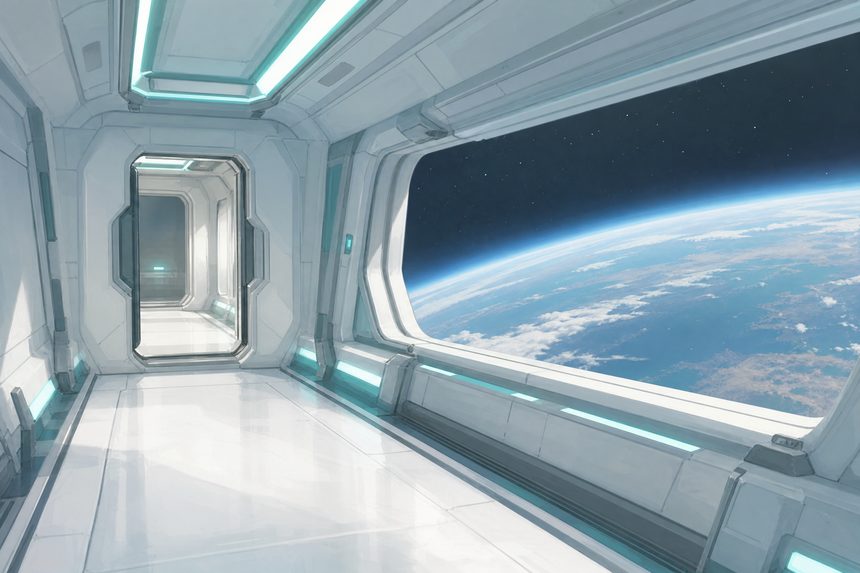
Everything else survived. The station is still a beautifully composed space, the mix is still exceptionally clear, and the pacing across twelve hours is still tighter than most things three times its budget. The problem is that all of it was in service of a surprise, and the surprise has expired.
What the twist was
I will describe it structurally rather than specifically, because the specifics matter less than the mechanism. For eleven hours the game presents a voice that guides you through the station, and the eleventh hour reveals that the voice has been describing a version of events that suits it rather than one that happened.
In 2020 that landed hard, because the default assumption was that a guiding voice in a game like this was a utility. It was there to tell you where the door was. Discovering that it had an agenda meant re-reading eleven hours of instruction as eleven hours of argument.
A twist is not a property of a game. It is a relationship between a game and what its audience currently assumes, and only one of those two things is fixed.
Why it does not work now
Because in the six years since, a guiding voice that turns out to be unreliable has become the standard expectation rather than the exception. I spent the first hour of the replay waiting for the voice to be lying, which meant I was never once persuaded by it, which meant the eleventh hour had nothing to overturn.
This is not the game's fault in any sense that could have been avoided. It made a bet on what its audience assumed, the bet was correct at the time, and the audience moved. But it does mean the game has a structural dependency on a moment that no longer functions, and eleven hours of setup for a payload that does not detonate is a difficult twelve hours.
| Element | 2020 | 2026 |
|---|---|---|
| Guiding voice | Read as a utility | Suspected immediately |
| Hours one to eleven | Instruction | Obvious foreshadowing |
| The revelation | Reframed everything | Confirmed a first-hour guess |
| Final hour | Excellent | Still excellent |
What the visuals tell you about ageing
Worth recording, because the received wisdom about old games is backwards. The station looks superb, and the reason is that it was built out of shapes, light and restraint rather than out of technique. Nothing here depends on an effect that has since been superseded, because almost no effects were used.
Meanwhile the writing, which cost a fraction of the art budget and required no technology whatsoever, is the part that has stopped working. Visual fashion moves slowly and audience assumptions move quickly, and a game built on the second is far more exposed than one built on the first.
What is better on the second visit
The final hour, which I had entirely misremembered. I recorded it in 2020 as the aftermath of the revelation, and it is not: it is a quiet, careful sequence in which the station is shown functioning normally with everything you now know, and it does not mention the revelation once.
Played without any surprise available, that hour is the best thing in the game. It is patient, it trusts the player completely, and it is the only part of Orbit Station that does not depend on when you happened to play it.
| Component | Six years on |
|---|---|
| Art and lighting | Unaffected; still exceptional |
| Sound mix | Unaffected |
| Pacing | Holds, but points at a dud |
| The revelation | Non-functional now |
| Final hour | Better than I remembered |
Where the replay leaves it
A game that was excellent in 2020 and is now a beautiful eleven-hour approach to a door that no longer opens. Nothing was done wrong; the assumption it was built against simply stopped being an assumption. The final hour is the part worth keeping, and it is the part that never needed the twist at all.